Rudraprayag Tour from Rishikesh
The second confluence, the Kedarnath road junction, and Corbett's leopard.
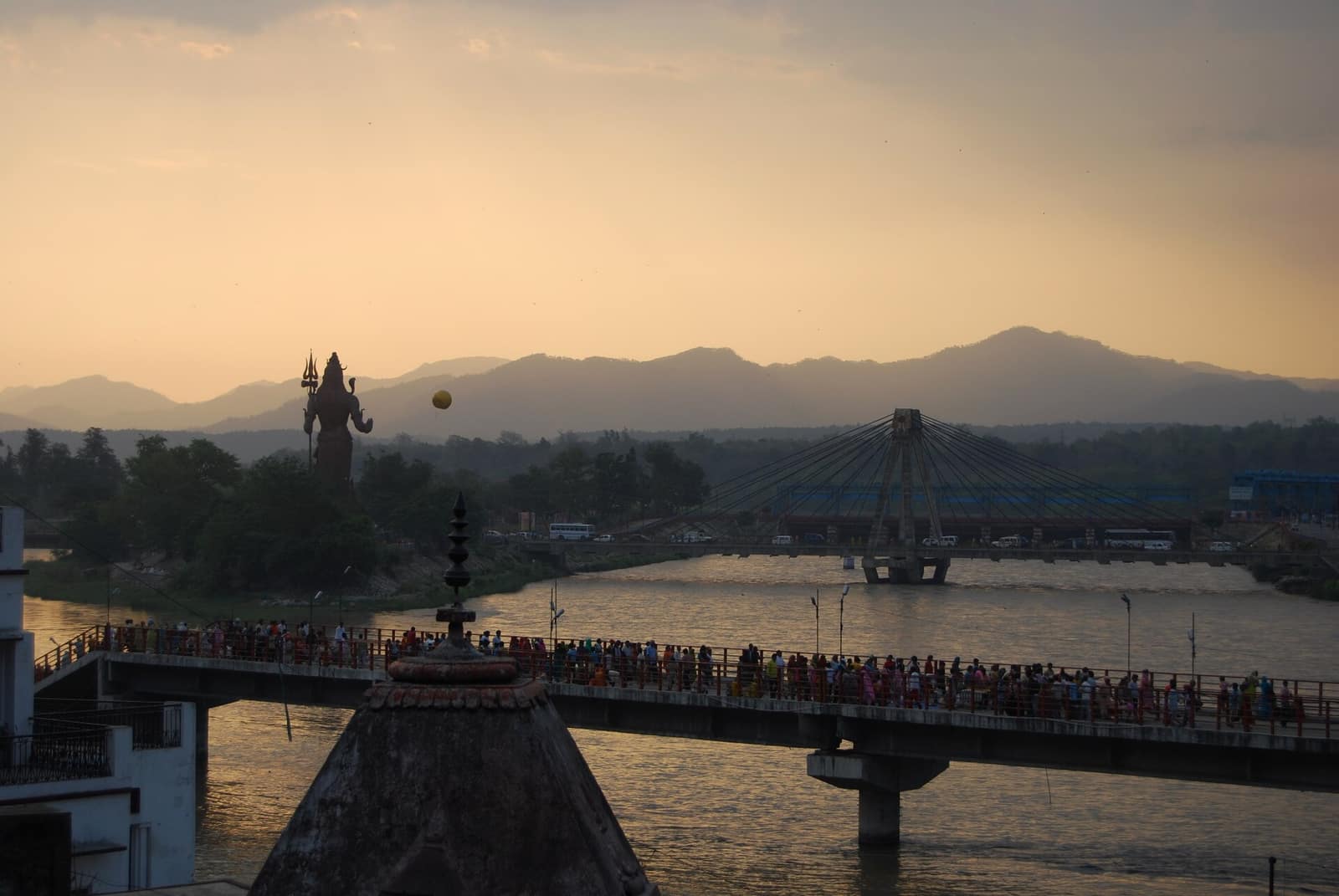
Rudraprayag is where the Mandakini, coming down from Kedarnath, joins the Alaknanda. It is the second of the five prayags on this road and the point at which the Kedarnath and Badrinath routes divide — straight on for Badrinath, left up the Mandakini for Kedarnath.
That makes it a waypoint more than a destination, and most people pass through it on a yatra rather than visiting it. It is worth stopping for all the same: the confluence is dramatic, hemmed in by steep rock, and the two rivers meet at an angle that is easy to see.
It is also the setting of one of the better-known pieces of Indian hill writing — Jim Corbett's account of the man-eating leopard that killed across these hillsides in the early 1920s.
Highlights
Quick facts
What to see
The sangam, reached by steps down from the road, with the Rudranath temple above it. Koteshwar Mahadev, a cave temple by the river a few kilometres back towards Rishikesh, is the better of the two stops and is often missed.
The town is a strip along the highway and is functional rather than attractive. The scenery either side of it is the reason to come.
As part of a bigger trip
Rudraprayag works best as a stop rather than a target: on the way to Chopta, which branches off above it, or to Kedarnath, Joshimath or Auli, or as the far point of a confluence day that takes in Devprayag on the way.
Paired with Devprayag it makes a full and genuinely interesting day — two confluences, the full length of the lower Alaknanda, and a clear sense of how the Ganga is assembled.
When to come, and the traffic
October to June. The one serious consideration is the Char Dham season, roughly late April to June and again in September and October, when this road carries very heavy yatra traffic and the journey time can stretch substantially.
In the monsoon this stretch is landslide-prone and closures happen. Outside the yatra peak and the monsoon, it is a straightforward and well-surfaced drive.
What's included
- ✓ AC cab & driver
- ✓ All tolls & parking
- ✓ Sightseeing as per plan
- ✓ Flexible itinerary
Not included
- ✕ Personal expenses & tips
- ✕ Anything not mentioned in inclusions
- ✕ GST where applicable
- ✕ Photos/videos unless specified
What to carry
Gallery



Frequently asked questions
The confluence of the Mandakini and the Alaknanda, being the junction where the Kedarnath and Badrinath roads divide, and as the setting of Jim Corbett's account of the man-eating leopard of Rudraprayag.
On the Kedarnath road
Rudraprayag is a junction on the way to Kedarnath, and most visits to it are part of a longer road journey.
- Rishikesh to Char Dham by carThese towns are stops on that road
- Rishikesh to Kedarnath by carThe Rudraprayag and Devprayag road
- Gangotri yatra by carThe Uttarkashi and Harsil road
- Places to visit near RishikeshDay trips with distances and fares
- Uttarakhand hills circuit by carSeveral of these in one trip
- Rishikesh cab servicesLocal packages and outstation journeys
Journeys are booked with Triveni Cabs; the activity is booked here. Confirm the activity first — its reporting time decides when you need to travel.
More nearby getaways
Fourteen trips out of Rishikesh — from a 45 km half-day to Dehradun to 250 km and three days to Auli.